Melde dich zum Newsletter an und erhalte 15 % Rabatt auf DOUXO SPA















Does your dog just have an Ear Infection... Or is it a symptom of something else?
Does your dog just have an Ear Infection... Or is it a symptom of something else?
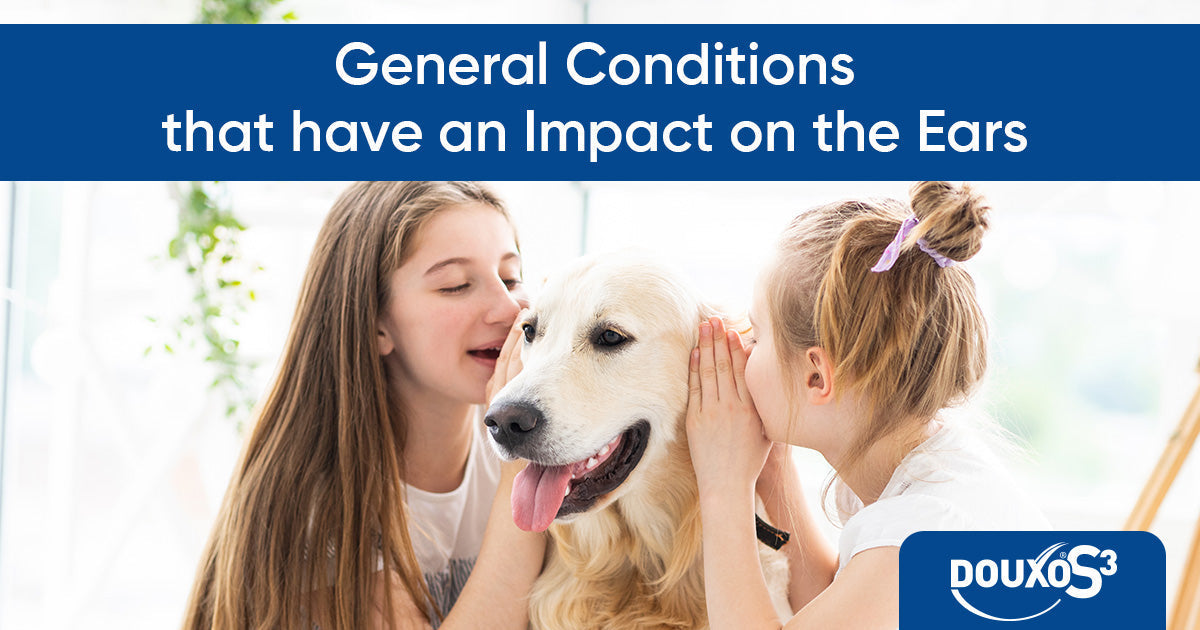
Ear disease is common in dogs, but with many different causes - some of which do not at first sight seem to relate to the ears! - it can be challenging to treat. Unfortunately, once your pet has suffered from one ear infection, it will often reoccur again in the future. For the best chance of managing ear disease successfully, you will need to get to know your pet’s ears and their general health a little better, cleaning them regularly and closely monitoring for any signs of a relapse, as prompt veterinary treatment is vital to prevent your dog’s ears from deteriorating and becoming painful.
Primary causes of ear disease
It is important to determine the underlying reason behind your dog’s ear disease, as this needs to be treated first before the ear disease can resolve. Several conditions can cause ear disease, including some that might not be immediately obvious, including:
-
Atopic dermatitis
-
Food allergies
-
Endocrine diseases (hormone disorders)
-
Parasites e.g. ear mites
-
Ear tumours
-
Foreign bodies e.g. grass seed
Allergic Skin Disease
Allergies affecting the skin also impact the ears – which are, of course, lined with skin. One of the most important allergic diseases, Atopic Dermatitis, is the most common primary cause of ear disease in dogs. Affected dogs will be hypersensitive to a range of environmental, food or flea allergens, which may result in skin and ear changes of varying severity. Some dogs may only show subtle signs of itching, while others will show severe skin changes that can affect most of their body.
Signs of atopic dermatitis may include,
-
Itching – this can be severe.
-
Saliva-stained skin - Especially between your dog’s toes.
-
Hair loss from self-traumatisation
-
Hot spots
-
Reddening of the skin
-
Sore skin lesions
-
Ear infections – This commonly affects both ears but may only occur in one ear.
-
Conjunctivitis
-
Nasal discharge
This is a life-long condition, and affected dogs may have regular flare-ups that increase in severity and frequency over time. However, in most cases it can be managed effectively with a suitable combination of medications, allergen avoidance, appropriate diet, and topical shampoos and mousses.
Endocrine disease
Endocrine disease such as hypothyroidism (underactive thyroid) and hyperadrenocorticism (Cushing’s Disease) may cause a wide range of clinical signs, including skin changes and recurrent ear infections. Though they are life-long conditions that require ongoing medication and monitoring, once they are under control and well-managed your dog’s ear infections should resolve.
Predisposing factors
There are several risk factors that may put your dog at an increased risk of developing ear disease. These factors alter the environment within the ear canal to provide favourable conditions for bacteria or yeast infections to develop.
Factors that may predispose your dog to developing ear disease include,
-
Ear conformation – Breeds of dog with pendulous, low-hanging ears or those with narrowed ear canals are more likely to suffer from ear problems.
-
Swimming – Moisture within the ear canal creates an environment that encourages bacteria and yeast infections.
-
Inappropriate ear cleaning – Ear cleaning is essential for some dogs when managing ear disease. But for other dogs, having their ears cleaned too frequently or using an inappropriate ear cleaner can predispose them to ear infections.
-
Excessive hair – The role of excessive hair within the ear canal is controversial, but for dogs with healthy ears, it should not usually cause a problem. However, for dogs who suffer from recurrent ear problems, excessive hair within the ear canal may exacerbate ear disease.
The progression of chronic ear disease
If dogs suffer from repeated inflammation and infections within the ear canal, chronic ear disease can develop and long-term changes to your dog’s ears may occur. Initially, wax production will increase as the glands that make it become hyperactive and enlarged (hyperplasia of the cerumen-producing glands). This provides an altered environment within the ear canal that makes it easier for bacterial and yeast infections to develop. Eventually, if not treated, irreversible end-stage ear disease will develop, where the ear canal will become irreversibly narrowed due to thickening and hardening (fibrosis and calcification), which ultimately will affect your dog’s hearing.
End-stage ear disease is very painful, so if your dog’s ear disease is not responding to medical treatment, your vet may recommend surgery to remove the affected sections of your pet’s ear to make them more comfortable. However, if chronic ear disease is recognised early and appropriate treatment and long-term maintenance care is provided, management with appropriate medications and lifestyle changes is usually successful.
Preventing the progression of ear disease
For many dogs with ear disease, a long-term commitment from their owners is required to manage their condition. However, with correct management, for the majority of dogs, it is possible to halt the development of chronic ear disease and prevent irreversible ear changes from occurring.
Firstly, it is important to identify and treat the primary cause of your pet’s ear disease. Most frequently, this will be a hypersensitivity reaction due to atopic dermatitis or a food allergy. This will involve treating the flare-up signs and may require long-term treatment to try and prevent future flare-ups. However, for endocrine illnesses, this will involve giving life-long medication to treat the condition.
Alongside managing the primary cause, your dog’s ears also need to be treated separately to prevent any existing ear infections from progressing. This may simply involve your vet prescribing a course of ear drops for your pet, but in more complex cases, follow-up tests may be needed to determine that the infection has been successfully treated.
Ear disease can be complicated, so your vet may recommend referral to a veterinary dermatologist, especially if your dog is suffering from advanced ear disease that does not respond to treatment.
Managing ear disease
Ear disease is very painful, so, to keep your pet comfortable and to prevent the progression of ear disease, all ear problems must be treated quickly. This will often include topical ear treatments to resolve any inflammation and infection, and additional pain relief medication may also be prescribed to reduce severe inflammation and pain.
Regularly cleaning your dog’s ears is the most effective way to manage ear disease long-term. Your dog’s ears should be cleaned before any medicated ear drops are given, enabling any waxy discharge to be removed so the ear drops can successfully penetrate the ear canal, as well as disrupting the “biofilm” that may be protecting the bacteria. Ear cleaning is often continued long-term, to establish an ideal environment within the ear canals and so protect against future infection. Your vet will be able to advise you on an appropriate ear cleaner and treatment plan for your dog, as well as showing you the best way to clean your pet’s ears.
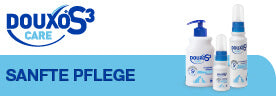
DOUXO® S3 CARE Ear Cleaner is a sensitive all-purpose ear cleaner that is suitable for use by most dogs. It is targeted at dogs with waxy ears, as its micellar technology breaks down wax while its soothing properties help settle itchy ears, ideal for dogs with atopic dermatitis. It can be used long-term for dogs with recurrent ear disease to improve the environment within the ear canal, helping to reduce future ear problems.
Another option is DOUXO® SPA Ear Cleaner, part of the DOUXO® SPA dermatological skincare range. It gently cleanses and moisturizes the ear canal while supporting the skin’s natural barrier, making it a suitable choice for dogs needing regular ear hygiene, including those with sensitive ears.
Both products offer high tolerance and can be integrated into a long-term ear care routine, as advised by your veterinarian.
Ear disease can be difficult for owners to manage. However, by dealing with the primary cause of your pet’s ear disease and caring for your dog’s long-term ear health will give you the best chance of successfully managing your pet’s ear disease. If ear problems recur, early veterinary treatment is essential to keep your pet’s ears in the best possible health.