
















5 New Year’s proposals for dogs with allergies
5 New Year’s proposals for dogs with allergies

Approximately 10-20% of the world’s cat and dog population suffer from allergies1, unfortunately. Managing your dog’s allergies can be challenging and sadly there isn’t a ‘one size fits all’ approach to keeping their itchiness under control. We all begin a fresh New Year with resolutions in mind, so we thought we would discuss 5 proposed New Year methods to aid the management of dogs with allergic skin disease.
Coat brushing
The first suggestion is to brush your dog’s coat at least once a week, or even more regularly depending on their coat type and thickness. Regular coat brushing encourages the removal of loose hair, dirt and allergens from their coat. ‘Allergens’ are substances that can lead to an allergic reaction. Examples of allergens include pollens, parasites and dust mites. By manually removing some allergens (or parasites!) from your dog’s fur, this can dramatically reduce their itchiness level which helps to reduce the risk of an allergy flare up.
There are many different types of brushes now available on the market and there may be certain types which are better suited to your dog’s coat type. Your dog groomer and veterinarian will be able to provide further information on this.
Check commonly affected areas
Secondly, pay particular attention to certain skin areas such as the interdigital regions (in between the toes), ears, skin folds and along their tummy. By regularly checking and monitoring these areas, ideally on a daily basis, you may be able to identify a problem such as a ‘hot spot’ much earlier, allowing quicker treatment and resolution. A hot spot lesion is a single area of moist dermatitis, and they are often a result of intense itchiness and self-trauma.
If you own a brachycephalic dog such as a Pug, Bulldog or a French bulldog, ensure that their skin folds are frequently checked for signs of inflammation or infection as these locations are likely to require additional TLC. The skin folds mainly affected in these breeds are the facial folds, lip folds and vulval folds. These dogs are more prone to developing sores in these areas due to their excess skin and conformation. Contact your veterinarian if you notice any signs of reddened skin or increased scratching.
Bathe your dog
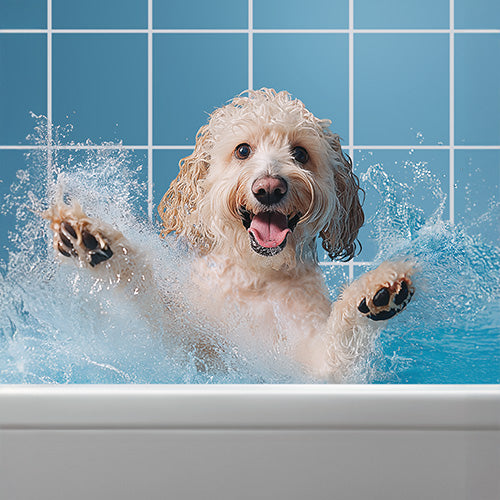
Thirdly, bathing is often recommended by vets as part of a treatment plan, to mechanically remove allergens. Similar to brushing, bathing helps to reduce the level of allergens on your dog’s skin. In addition, some shampoos (like DOUXO® S3 CALM) can actively soothe irritated skin and help reinforce the skin barrier. Others (e.g. DOUXO® S3 PYO) actively knock down the numbers of bacteria and fungi, to respect and protect the skin.
In some skin cases, your vet may prescribe a prescription shampoo which may contain specific medicated ingredients. These prescription products often require a specific length of contact time on the skin/lesion to achieve the full therapeutic effect. Ensure any shampoo applied is always rinsed away thoroughly, as sometimes residues can make the skin feel very itchy. Care should always be taken not to bathe your dog too often as this can cause their skin to become dry.
Parasite prevention
Fourthly, don’t forget the pesky parasites! Frustratingly, due to warmer climates, external parasites such as fleas can be present all year round. Some dogs are allergic to flea saliva and for these unfortunate individuals their allergy can be triggered by just one flea bite. By keeping up to date all year round with flea and worming products and by ensuring every pet in the house is protected, you are less likely to encounter parasite related issues. Your vet will be able to guide you on the most suitable flea and worming product for your dog, as this can vary depending on your dog’s lifestyle.
Keep treatments on schedule
Finally, the key to managing any health condition is routine and schedule. This can include daily skin care support, medications, hypoallergenic diets and environmental control. With busy lifestyles it may be a useful idea to make a ‘doggy calendar’ so that nothing is ever missed or done twice. This calendar could contain medication reminders and skin product application times. Your veterinarian will work closely with you and your canine friend to establish what works for your dog and they will provide guidance on management strategies.
Skin products such as DOUXO® S3 CALM help to sooth itchy, irritated or sensitive skin. This topical product comes in a variety of forms including shampoo, pads and leave-on mousse. DOUXO® S3 CALM will help to hydrate dry skin and brings significant relief to irritated skins.
Conclusion
To conclude, managing your dog with allergies can be challenging, but hopefully with a consistent routine and a variety of strategies on board, their skin issues can be well controlled.
We recommend DOUXO® S3 CALM